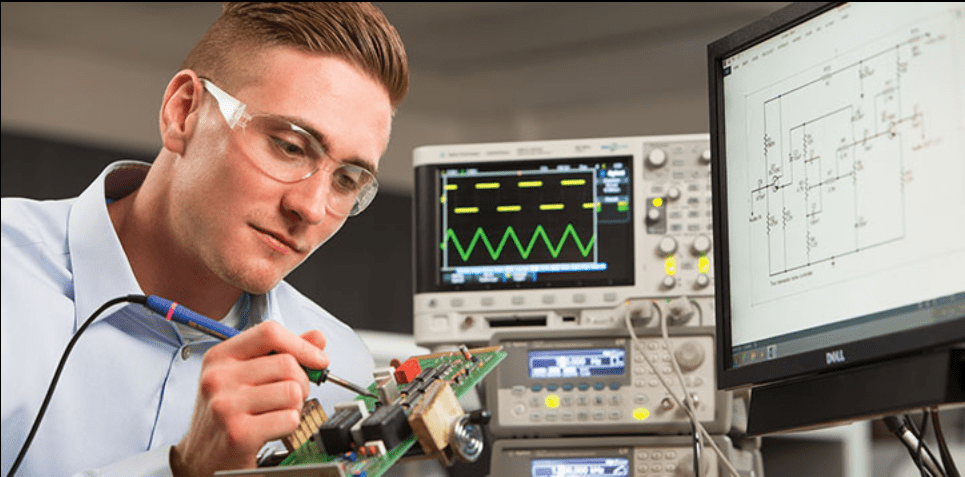
Electrical engineering has always been a revolutionary field, with its ground-breaking inventions in the late 19th and early 20th century including radio, telephone and television. In the modern day that it has moved into a more diverse and dynamic field. In this article, we take a look at what to expect in electrical engineering employment and the training and skills required for that.
Fields of employment
There are a variety of businesses that aim to employ electronic engineers including those operating in :
- defence
- aerospace
- automotive
- aviation
- mobile phones
- telecommunication,
- robotics and medical instrumentation.
There are a lot of job titles, but to name a few we have: audio engineer, avionics engineer, broadcasting professional engineer, chief electrical engineer, chief electronics engineer, chief engineer – radio and television broadcasting, circuit design engineer, control systems engineer. Some of the biggest private employers worldwide include Apple Inc., Samsung Electronics, Hewlett Packard (HP), Sony, and Microsoft.


What to expect ?
As a qualified electronics engineer, you can be involved in any number of stages during the production of a new product, device or system.
You typically work as part of a project team, Next to a number of experts from other branches of engineering to handle all the differing development aspects of a new product or system.
Naturally you could be involved in proposing the initial concept, going on to design and develop the product according to plans, following, testing and optimization of any original types that are created, before final manufacture.
Starting salaries for electronics engineers are around £21,000 to £25,000. With experience and working at an incorporated engineer level, you could earn £28,000 to £40,000.
As a senior engineer you can expect a salary of between £40,000 and £65,000, with chartered engineers earning at the top of this scale. But note that Salaries vary from company to company, with some sectors attracting higher salaries due to demand.
Hours of work can also vary, but a 40-hour week is most common
Qualification
The most common qualification is to have a degree in electrical or electronic engineering. however, there are other types of qualifications like National Vocational Qualifications (NVQ) and A Higher National Diplomas (HND)
Skills required
You will be required to have excellent communication skills, (verbal and written), in order to provide accurate technical details and project updates to colleagues and senior management. Furthermore, writing reports and technical specifications will be a key responsibility. You may be required to supervise technicians or colleagues and have keen project planning skills.
Gender disparity
One more thing to note in employment in this field is the significant gender disparity, with fewer women than men working in the area. This is thought to be attributable to poor female retention rates in the sector and also, a consequence of the poor pipeline of graduates. Recent statistics show that only 16% of engineering and technology undergraduates in the UK are women. The most recent data from the National Science Foundation show this figure as 20% in the US, with India doing better, with one of the highest level of female graduates in engineering at 30%. In terms of translation into employment, 11% of engineers are thought to be female in the UK, (the same report stated 10% specifically for electrical and electronic engineering), 15% of all engineering workforce is estimated to be female in the US and 26% in India.
 INELECTRONICS TECH Blog
Leave a comment